
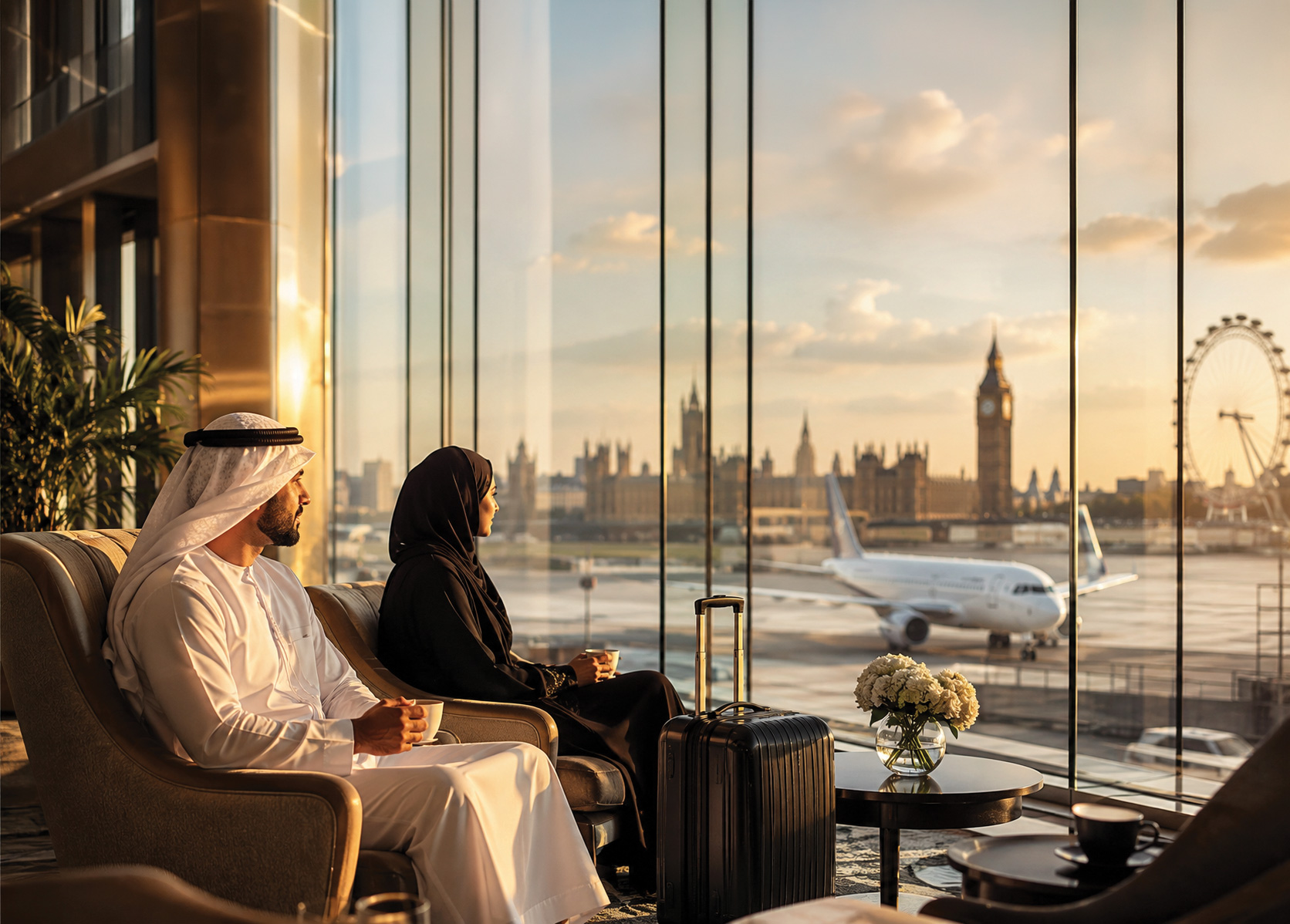
Macroeconomic headwinds and recent regional conflicts have temporarily slowed outbound travel from the Gulf to the United Kingdom, but a deeper analysis of VisitBritain’s latest Tourism State of the Nation report suggests that regional travel operators have solid reasons to remain cautiously optimistic for the latter half of 2026 and heading into 2027.
The comprehensive April 2026 report details a fragmented landscape. The headline figures for the Middle East present an immediate challenge: flight bookings from the region to the UK have temporarily halved, tracking 48 per cent down since the onset of the recent conflict as of April 2026.
However, travel trade experts note that the underlying structural drivers for UK-bound travel remain resilient, paving the way for a calculated recovery.
Despite current booking deficits, VisitBritain highlights that the return of some Gulf connections is aiding long-haul connectivity. As airlines stabilise their networks and restore these vital premium routes, capacity is expected to drive a booking rebound later this year.
While global consumer confidence has taken a hit due to inflation, an optimistic outlier in the data shows that consumer confidence regarding making major purchases remains entirely steady and level with last year. For the affluent Middle Eastern demographic, a luxury holiday to the UK falls squarely into this resilient major purchase category.
While economic growth forecasts for the US and Eurozone have been trimmed for mid-2026, forward projections for 2027 show a clear structural rebound. For instance, US real economic growth is forecast to climb back up to 2.7 per cent next year, signalling a broader stabilisation in global travel sentiment.
Within the UK travel trade, business confidence regarding performance over the next year remains net positive in the arts, entertainment, and recreation sectors. This means the premier experiences that draw travellers, from West End theatre to major sporting events, remain highly competitive and operational.
The immediate caution for Middle Eastern travel agents stems from rising operational costs rather than a lack of consumer interest. Due to recent geopolitical conflicts and disruptions around the Strait of Hormuz, global oil prices have jumped into a volatile $90-$110 per barrel range. This has directly impacted jet fuel prices, which surged to nearly double the average price seen in 2025 by late April.
Consequently, rising airfares and general cost-of-living pressures are cited as the primary deterrents for global travellers right now.
The current data signals a temporary wait-and-see attitude among Gulf travellers rather than a permanent shift away from the UK market. The report also notes that Britain and the rest of Europe are not being perceived negatively in relation to international conflicts.
The strategy for the remainder of 2026 will require focusing heavily on the value proposition of premium travel, leveraging restored Gulf flight connections, and banking on the projected economic stabilisation heading into 2027.