
The Middle East travel and tourism sector was expecting to generate revenue of around $250 billion by the end of 2008, according to earlier research released by the World Travel and Tourism Council (WTTC).
Globally the travel and tourism sector was expecting to generate close to $8 trillion during the same period, rising to approximately $15 trillion over the next 10 years. Have these figures changed?
Not according to a Deloitte report which cited that despite the financial turmoil of the past months, global tourism was thriving and was expected to still generate this income.
It predicted years of growth ahead for the emerging markets of India and China, but the big success story remained in the Middle East.
Deloitte’s analysis of the hotel performance across the Middle East region discovered that in 2007 the region had the largest increase in visitor numbers in the world - up to 13 per cent - with Saudi Arabia having one of the highest growth rates across the ME, at almost 51 per cent.
The Middle East had the largest rise in air passengers in 2007 as well, and is spending around $43 billion improving its airports. Its hotel business grew faster than any other region, apart from Central and South America, with revPAR up 17 per cent.
The Middle East market is still dominated by up market and luxury hotel developments despite the shift towards mid-market and budget accommodation, which amounts to 30 per cent of expected room supply, according to a survey conducted by TRI Hospitality Consulting, Dubai, a management consultancy in tourism, hotels, leisure and real estate.
Dominating by 47 per cent is the five star hotel sector where 146 hotels and more than 40,000 hotel rooms are to open over the next few years. A total of 88 hotels and 25,000 rooms are expected to materialise by the end of 2010.
The UAE remains the largest single hotel market in the GCC, which will add 178 hotels and more than 57,000 rooms by the end of 2010, a 73 per cent of total future supply in the GCC.
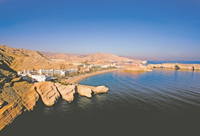
Egypt and Jordan have shown strong growth, while Oman, offering cultural experiences over sun, sea and sand tourism, saw a 50 per cent rise in revPAR in 2007.
The region’s hotels are still enjoying some of the world’s highest occupancy figures, strongest revPAR and best average room rates, and with predictions that international visitor numbers in the Middle East will grow between 6 to 10 per cent in 2008, compared to a global rate of 3 to 4 per cent.
Reed Travel Exhibition Group exhibition director Paul Kennedy also believed that the ‘credit crunch’ would not have a huge impact on the meetings industry in Asia the Middle East.
The typical luxury traveller in 2008 was one that had an altruistic approach to travel, did not flaunt his or her wealth and chose simplicity and privacy above all else. Last year Departures Magazine’s editor-in-chief Richard Story’s suggested to attendees at the ILTM conference to, “…. get over the 80’s luxury once and for all. Consume, waste, consume waste – that belongs to the unsophisticated end of the luxury wedge which is a long way from the colour green.”
At the same conference, Costas Christ, the internationally recognised expert on sustainable tourism and chairman of the WTTC Tourism for Tomorrow Awards said, “The need to be reunited with the world around us is a luxury. The sustainable environment, which always was a luxury, has now become the ultimate luxury to strive for.”
by Cheryl Mandy