
Sustainable tourism has become a hot topic in recent times. Whether it’s increased energy efficiency or more skillful use of natural resources, the environmental message has permeated the consumer conscience.
Thankfully, our industry has always been exceptional at adapting and responding to its customers’ needs and it’s exciting to see that the tourism trades in the UAE and beyond are collectively making huge strides towards a more sustainable future.
Throughout Arabian Travel Market’s 16 year history, many important issues have been brought to the fore. Each year the show discovers different global trends and has a hand in developing international insights - eco-tourism is one example of this.
In an age of natural disasters, G8 summits and the pending weight of global warming, eco-tourism and environmental conservation are embedding their way into the consciousness of holiday-goers around the world.The carbon footprint of the travel and tourism industry, including aviation, represents about five per cent of global carbon emissions, according to the UN World Tourism Organisation.
While the Arabian Gulf may be slower on the uptake than its European counterparts, operators are starting to adopt and incorporate ‘green thinking’ into their concepts.
Positive strides were made last year when several of Dubai’s most prominent hotel groups pledged to reduce their CO2 emissions by enrolling in Dubai’s Department of Tourism and Commerce Marketing’s CO2 reduction initiative; a scheme that aims to reduce Dubai’s hotel carbon emissions by 20 per cent by 2011.
This might not seem substantial, but when you consider that an average hotel in Europe produces 3,000 tonnes of CO2 per annum, compared to 6,500 tonnes by Dubai’s properties, it’s a considerable scheme with achievable goals.
It’s not entirely fair to compare what is happening here to the rest as the world as the Middle East has inherent obstacles when it comes to reducing CO2 emissions, such as a year-round dependence on air-conditioning systems. While a 20-per-cent reduction will prove a difficult task, its benefits to the environment will be exponential. If hotels in the region reduce their carbon footprint by anything from 20-30 per cent through the implementation of simple energy-saving techniques, it can also have a positive affect on their bottom-line, potentially saving millions.
Both the governments in Dubai and Abu Dhabi have created new laws and guidelines to ensure that sustainable development is a key focus for all future projects.
Perhaps one of the most notable developments in the region is the $22-billion Masdar Initiative, launched by the government of Abu Dhabi, to build the world’s first carbon neutral city, running on totally renewable energy.
This will all reflect positively on the tourism industry in the Middle East, as it will result in energy savings and subsequent improvements to the sector’s bottom-line in addition to promoting a more environmentally-friendly vision for the region.
Every year at Arabian Travel Market, our diverse seminar programme and range of debates thrust current issues into the limelight as well as investigating hot topics of the future. Green tourism has been an important issue for several years now and has been featured heavily at previous shows.
And you can bet your bottom line it will be once again at the forefront of every conversation at this year’s event which takes place from May 4 to 7 at the Dubai International Exhibition Centre, Dubai, UAE.
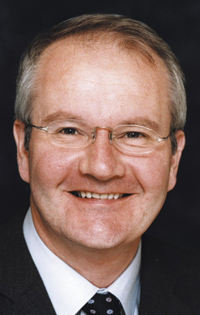
By Mark Walsh, group exhibitions director, Reed Travel Exhibitions – organiser of Arabian Travel Market.