
THE World Tourism Organisation (WTO) expects tourism in Arab countries to increase by two to six per cent this year, despite the fact that tourism figures are on the decline globally.
The global crisis and swine flu outbreak have adversely affected international tourism, with the number of tourists in the last two months declining by 7.7 per cent compared with the same period in 2008, higher than the two per cent decline predicted by the WTO for 2009.
However, statistics show that Arab countries are better prepared to overcome the tourism crisis than any other area in the world. The Middle East has had the highest tourism growth rate in the world (an increase of 11 per cent in 2008 compared to two per cent in the rest of the world). The global crisis has also played a part in establishing Arab tourism, which has suffered over the past few years, with only 42 per cent of Arab tourists visiting the Arab World, while 58 per cent headed outside of the region.
Arab families were expected now to look closer to home in order to reduce expenditure and limit the threat of swine flu. In fact, due to this outbreak air traffic from Saudi Arabia to the US and Europe had taken a massive dive, with airlines and travel agencies reporting huge losses, according to a recent report in the Gulf News. There had however, been a surge in bookings to Asian countries.
Experts do not expect the number of tourists visiting Jordan to decline, especially since over 50 per cent of 4.8 million Arab tourists are planning to spend their holidays in Jordan this year, while in Lebanon, an estimated two million tourists, mostly Arabs, are expected to visit the country in 2009. Statistics issued by the Syrian Ministry of Tourism show that the growth in its Arab tourism was due to the increase in the number of tourists from GCC countries, which amounted to 116,109 tourists in Q1 2009, compared to 94,158 tourists in the same period in 2008.
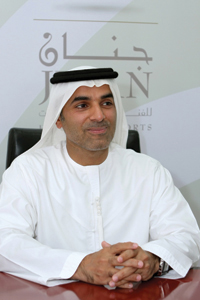
Saeed Ahmed Mohammed bin Butti, chairman of Al Dhiafa Holding and Jinan Hotels and Resorts, believes there is a need to enhance tourism and services in Arab countries, as tourism contributed a substantial amount to the Arab world’s gross domestic product (GDP).
He said that attracting tourists to the region was of prime importance, and this could be achieved by diversifying tourism services, to include religious tourism, medical tourism, tourism for relaxation purposes, sports tourism, education and art tourism, and touring for festivals and conferences.”
The need to promote Arab tourism was also important, “especially when we look at the difference between the percentage of international tourists and Arab tourists (2.5 per cent overall), which is a really small figure if we take into consideration the region’s outstanding tourism features.
He added, “Arab tourism is the main source of tourism income, as the Arab tourist spends more and stays longer, and that’s why occasional tourism should be developed and supported by providing a perfect setting for investments, facilitating the movement of Arab assets, facilitating travel between Arab countries, and facilitating the issue of visas.”
He said that tourism played an important part in providing jobs for thousands of workers, as the increase in hotel and tourism facilities will require an even larger number of employees.
Residents from the GCC countries are estimated to spend $20 million on annual vacations, with Saudi Arabian tourists spending $8.5 billion, followed by Kuwaiti and tourists from UAE ($5 billion each), Qatari tourists ($600 million), Omani tourists ($400 million), and Bahraini tourists ($300 million).