
The five year Siyaha II project aims to promote Jordan as an international tourism destination by establishing the framework enabling a private sector driven approach, which will spur tourism growth and preserve national treasures. MAYSA ZUREIKAT sits with the project’s Chief of Party IBRAHIM OSTA
With a budget of $28 million to be spent over five years, the USAID funded tourism project known as Siyaha II builds upon the work of Siyaha I and adopts similar methods to continue work begun under this first project.
The latest project differs as there is now a greater focus on supporting marketing for tourism, and human resource development is targeting the higher educational levels.
“We are also working with the Ministry of Tourism and Antiquities (MoTA), the Department of Antiquities, Petra Archaeological Park and Wadi Rum Protected Area to improve conservation, interpretation and presentation of sites around Jordan,” said Osta.
Other new initiatives the project is helping include the development of museums, enlisting new Jordanian sites as World Heritage sites with UNESCO, and supporting the development of new themed tourism trails with the Ministry of Tourism.
Osta said that the overall key focus was on environmental and community development around tourism sites to benefit from tourist traffic to their towns.
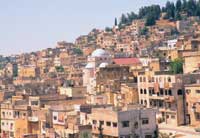
The USAID funded project is currently working in Salt, helping the local MoTA develop the Salt Tourism Trail, which will be the model for trails around Jordan. The project is also working on a similar idea in Ajloun, and in Amman with JARA (Jabal Amman Residents Association) formed by local residents to maintain and preserve the neighbourhood’s identity and ethnicity.
“The private sector is the driver of economic growth and sector development through investment and employment,” said Osta, adding that they play a very important role in developing tourism by attaining international services standards, offering diverse products and fueling economic growth within communities.
“Tourism cannot be developed without the support of the private sector, which provides the services needed to attract tourists to an area, such as restaurants, hotels, cafes, souvenir and handicraft shops, and so on,” he said.
The Siyaha II project is also working with the private sector to identify market needs in order to implement programmes that enable the industry to meet these needs.
For example, in the area of human resource development, vocational training programmes as well as college and university level curricula for tourism and hospitality courses are being updated to meet the needs of employers, and hotel and restaurant representatives are supporting such efforts.
For example, with the vocational training colleges students undergo a six month internship which takes place at partner hotels or restaurants that are supporting the programme. This means that the private sector is getting the skills and qualifications that they want, and students of hospitality and tourism have a good chance of finding employment.