
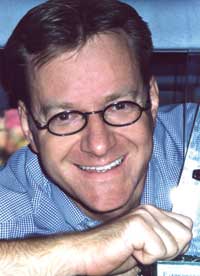
Six Senses Resorts and Spas managing director BERNHARD BOHNENBERGER was in Dubai recently and spoke to CHERYL MANDY about the group’s latest eco initiatives
How are the Six Senses properties faring in the downturn?
The Maldives is still doing well – the luxury end is less affected and anything outside of Thailand is OK. Unfortunately the mass media never present a balanced view, it is so often sensationalised and when it comes to Thailand, irresponsible reporting has done dreadful damage.
If tourism organisations, hoteliers or authorities could get together say in one country such as Thailand and form some sort of class action to force the media to report on the situation in a fair and balanced way or suffer the consequences, it would be a good thing for the industry.
What new properties are in the Middle East and what are coming up?
The Evason Ma’In Hot Springs & Six Senses Spa, a 45 minute drive from Amman in Jordan, opened two months back. It is an inspiring resort actually lying 264 metres below sea level. This hotel was completely renovated and a new spa built using the hot spring waters that are famous in this area.
We have also just signed a Six Senses Spa at Al Bustan Palace Intercontinental Muscat Oman, which is expected to officially open by mid 2011. Our Sharq Resort & Spa, where the hotel is managed by Ritz-Carlton and the spa is managed by Six Senses, is unique in the Middle East because it recreates the authentic atmosphere of a traditional Qatari village, and it continues to do well.
The destination spa planned in India is a bit slow on the permission front so work hasn’t started yet. However, it will happen eventually.
What is your Eco Centro project on Soneva Fushi in the Maldives all about?
As a group we have this very strong vision to not do anything that may harm the environment. We have introduced many environmentally and socially responsible initiatives, including getting the hosts (staff) to participate in schemes such as the collection of garbage, beach cleaning, educating local children, and so on.
Then we thought – why not go into this in an extra way and create this Eco Centro, an integrated waste management project which addresses anything ecologically in-house. The project is headed by a core team which takes all the glass bottles that are not recyclable, crushes them, and this gets mixed into the building materials used for new structures or decorative items. All the waste matter from the hotel operation is separated, some is fermented for energy to be used elsewhere and some is used as fertiliser.
The concept is to have any waste being transferred into wealth, to have a second life-span and with a benefit to the community and the environment. Combined with a training and awareness programme, all hosts and the local community learn the process and know about the benefits of ‘waste to wealth’ concept.
Will this concept extend over all Six Senses properties?
This is the plan. Soneva Fushi, which is 100 per cent owned by the group, has always been our breeding ground for pilot projects like this, and once fully developed then get rolled out throughout Six Senses.
What other eco initiatives do you have planned?
Currently being tested at the Maldives property is a deep sea water cooling project. We put pipes deep into the ocean and pump up this very cold water through one test villa. Eventually this will be pumped through all villas and will replace the chillers for the air conditioning we have at present. We are in the final process to install a 350k watt solar power (photovoltaic system) power plant.
We are also working with a UK based non-profit company called the Converging World, which invests in renewable energy projects in the developing world. It buys windmills and installs them in places that will have huge needs for energy in the future and are planning to create power plants – usually highly polluting plants. It is a self propelling proposition; the windmill creates energy which is sold to the national grid of the country, 75 per cent of the revenue for that energy comes back into the windmill project and the other 25 per cent goes into community projects in the area. We prove to people that what we are doing is also good for them, and that it is an ideal way to off-set carbon.
Soneva Fushi’s mission has been to become carbon neutral by next year. Is this going to happen?
All is on track. Now we want, by 2020, to be decarbonising – this is going beyond carbon neutral. For example, when you plant bamboo it absorbs carbon from the air as it grows. When you then use this product sustainably for furniture or fuel you are actually decarbonising.