
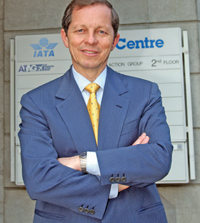
THE International Air Transport Association (IATA) has challenged the aviation industry and governments to bring an aligned global approach on aviation carbon emissions to the United Nations Framework Convention on Climate Change (UNFCCC) conference to be held this December in Copenhagen.
“Environmental responsibility is a core promise of aviation, alongside safety and security. But we can only deliver on that promise if governments are aligned with all four pillars of our strategy,” said Giovanni Bisignani, IATA’s Director General and CEO in an opening address to the annual Aviation and Environment Summit being held in Geneva by the Air Transport Action Group (ATAG).
All players in the aviation industry are united in a Four Pillar Strategy on Climate Change focused on;
• Investment in technology,
• effective operations,
• efficient infrastructure and
• positive economic measures.
“I am convinced that we are on the right track with respect to technology, operations and infrastructure. The fourth pillar, positive economic measures, needs our urgent attention,” said Bisignani. “Governments must move beyond punitive economic measures, such as excessive so-called environment taxes, to focus on measures that reduce emissions in a globally coordinated effort. That was the vision of the wise drafters of the Kyoto protocol. But governments are a long way from achieving it.”
The International Civil Aviation Organisation’s (ICAO) 15-country Group on International Aviation and Climate Change (GIACC) has been tasked with producing proposals and targets in preparations for Copenhagen.
Bisignani also highlighted the achievements of aviation in reducing emissions. “In 2007 I set out a vision for aviation to achieve carbon-neutral growth on the way to a carbon-free future. Twenty-two months later we are closer to carbon neutral growth than ever. We cannot, however, be complacent. We have a responsibility to secure the future of the 32 million jobs and $3.5 trillion in economic activity dependant on aviation. We need global leadership that unites industry and governments with the common purpose of reducing emissions,”