
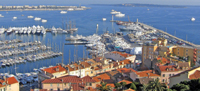
French Riviera beckons, despite the credit crunch
SOAKED in sun and sophistication, Cannes has long been the favoured summer retreat for the well-heeled Middle Eastern tourist. For Jean-Jacques Lottermoser, director of tourism in Cannes, a key priority this year is ensuring that they will still come, travel and spend, despite the financial crisis.
A unique mix of socio-economic factors has made Lottermoser’s task a challenging one. “Tourists from the Middle East are very important for our economy. We are used to having them spend July and August here. With Ramadan starting earlier this year, we expect our Middle Eastern guests to leave by August 10. This means we lose at least 20 days of their occupancy,” said Lottermoser.
“We are also focussing on expatriates settled in the Middle East, who do not observe Ramadan and may want to leave the region during this time.” Lottermoser was speaking on the sidelines of a workshop organised by Cannes Tourism for travel trade representatives from the Middle East.
Historically Cannes has been a preferred destination for the Middle East. Last winter, however tourist traffic dropped off by 20 per cent, a direct outcome of the credit crisis, leading Cannes Tourism to come up with innovative schemes to promote the city.
“We plan to work closely with tour operators and promoters, getting them to meet our partners without an intermediary. Since everyone is now looking to economise, we have to be more direct,” said Lottermoser.
At the workshop, tour operators from the Middle East met a diverse range of service providers, who could be featured in summer promotions. Lottermoser informed that best vendors, plus a partner, would be offered a week’s holiday in Cannes, as an incentive scheme.
While synonymous with its film festival, Cannes also wants to promote itself as a destination with more to offer. Laure Toma-Auneau, leisure tourism manager for Cannes Tourism, said, “Workshops and meetings with our partners (hotels, luxury shops, incoming travel agencies and transportation partners), were organised so that Middle Eastern travel professionals can understand what is available.”
“When they return to their country, they are able to sell Cannes beyond the luxury and film festival,” she said. The group took in the old city, islands, golf courses, spas, and accommodation offerings from three and four star hotels and residences.
Lottermoser also presented the Cannes-Le Club card, a new product for weekend package stays, with attractive rates for experiences like diving, flying, golf, and gastronomy classes. “There is a new demand for ethical tourism and authentic experiences beyond lying on the beach. Le Club meets these needs of today’s tourists: given the strong increase in short stays, the need for recognition and pampering, the new trend in ethical travel and the erosion of purchasing power.”
In July and August, about 20 per cent of incoming tourists are from the Middle East, and tourism products are designed with them in mind, said Toma-Auneau, “All the major hotels have kids’ clubs and private beaches which are important for families. Middle Eastern guests prefer big rooms, preferably interconnected, big kitchens in the serviced apartments, Arabic TV channels and shattaf in the bathrooms, which have been provided in the newly decorated hotel rooms.”
Based on feedback about the lack of nightlife, a big new summer disco was opened at the Palais. “Last year in 45 days, we welcomed 150,000 guests, with the Middle East heavily represented,” said Lottermoser.
Currently, Cannes has 129 hotels, including six five-star hotels, with 62 per cent average occupancy. After Paris, it is the second-most popular MICE destination in France, attracting 500,000 business travellers annually. The value of the MICE business in Cannes is 800 million euro per year.
Hotels have 100 per cent occupancy during the Cannes International Film Festival in May. Lottermoser said, “This year we will see more rational, less emotional spending, and companies focussed more on budgets. But spend they will, as part of their promotions. Especially when you bring stars here, you have got to spend.” Credit crunch or not, the show will go on.
by Shalaka Paradkar