
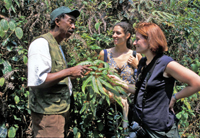
Tourism that educates participants in tandem with conserving natural habitat, wildlife and communities
ECOTOURISM - low impact travel to fragile and usually protected areas - is a form of tourism that helps educate the traveller, provide funds for conservation and help local communities help themselves. It also advocates respect for different cultures, and has a focus on volunteering, personal growth and fosters in the traveller a greater appreciation of the natural habitat.
Responsible ecotourism is that which minimise the negative aspects of conventional tourism on the environment and the community, and a large part of this includes projects involving recycling, energy efficiency, water conservation and creating opportunities for the local communities.
In many countries ecotourism is a major industry of the national economy, such as in Antartica, Costa Rica, Ecuador, Nepal, Kenya and Madagascar. It makes up at most three to four per cent of the tourism industry, according to Francesco Frangialli, former UNWTO secretary-general.
Unfortunately, the concept of ecotourism is widely misunderstood or mis-used as a marketing tool to promote any tourism related to nature.
“Tourism is meant to be mutually beneficial,” said Andy Payne, director of Wilderness Safaris in South Africa. “It is up to us to get this understanding across to our guests, for the better they understand the more they support us.”
He believed that “greenwashing” practises - where tourism schemes are commercialised and disguised as sustainable, nature based and environmentally friendly ecotourism - were destructive, economically exploitative and culturally and morally wrong. Various organisations give guidelines now, including The Global Partnership for Sustainable Tourism Criteria (GSTC Partnership), a coalition of 32 organisations that promote the understanding of sustainable tourism practices and the adoption of universal principles.
“Consumers deserve widely accepted standards to distinguish green from greenwashed,” said Jeff Glueck, chief marketing officer of Travelocity/Sabre, referring to the formation of the GSTC Partnership. “These criteria will allow true certification of sustainable practices in hotels and resorts as well as other travel suppliers,” he said.
“They will give travellers confidence that they can make choices to help the sustainability cause. They also will help the forward thinking suppliers who deserve credit for doing things right.”
This partnership was formed by the United Nations Foundation (UNF), the Rainforest Alliance, the United Nations Environment Programme (UNEP) and the United Nations World Tourism Organisation (UNWTO) last year.
The new criteria – based on thousands of best practices culled from existing standards used around the world – will help guide businesses, consumers, governments, non-governmental organisations and education institutions to ensure that tourism helps, rather than harms, local communities and the environment.
“Sustainability is just like the old business adage: ‘you don’t encroach on the principal, you live off the interest’,” said Ted Turner, founder and chairman of UNF. “Unfortunately, up to this point, the travel industry and tourists haven’t had a common framework to let them know if they’re really living up to that maxim. But the GSTC will change that.”
Responsibletravel.com links travellers with tour operators and local accommodation owners across the world who comply with the ‘responsible’ criteria. The website gives some good guidelines to tourists seeking bonafide ecotourism destinations to determine the authenticity of the accommodation owner’s claims.
by Cheryl Mandy