
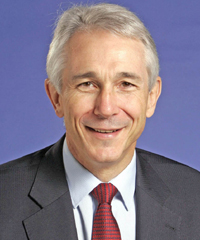
CATHAY Pacific Airways chief executive Tony Tyler is urging the global aviation industry to work towards establishing a “more efficient and harmonised process of aviation security that can make life easier for the millions of passengers who keep the industry alive,” a statement from the carrier said.
Speaking at the International Aviation Security Conference 2009 held at the Regal Airport Hotel at Hong Kong International Airport last month Tyler said that Cathay Pacific supported such a move, led by the International Air Transport Association (IATA) and the International Civil Aviation Organisation (ICAO), to “accelerate the harmonisation of security standards through one stop security,” the release quoted.
“The airline industry has been trying to achieve this since 1997 but progress has been painfully slow and sporadic,” said Tyler. “That’s why we support and endorse the call from IATA for ICAO and its aviation security panel to provide the leadership to make one-stop security a global
reality.”
While there was no suggestion that the industry should relax its guard, Tyler felt that the industry had to make a greater effort to tackle some of the long standing issues that make the security process more difficult and more costly than it should be.
“I have lost count of the number of times customers have complained to me about the ambiguities and lack of consistency they encounter in security requirements in the world’s airports. Some airports require you to take out your laptop, others don’t; some make you remove your shoes, others don’t; some want you to take off your belt; others don’t,” said Tyler.
“What kind of message does that send to passengers? They are understandably puzzled and frustrated and more than occasionally worried about these inconsistencies. Take liquids and gels, as another example. As Giovanni Bisignani of IATA asked in a recent speech in New York, where is the data that shows that a shampoo bottle is a greater risk than a belt buckle? There is none. Yet we spend millions to limit carry-on liquids.”
He questioned how customers could be expected to make sense of the fact that sometimes they have to be screened twice, even while in transit, and that there were a “baffling array of policies covering metal knives onboard aircraft and in the secure areas of airports.”
“The bizarre array of rules currently in place serves only to confuse and annoy passengers, create unnecessary costs for airlines and caterers and place strain on security staff,” said Tyler.