
I’ve often wondered if world tourism actually contributed to the demise of the resurrection of the world’s wildlife and its much trampled sight seeing destinations.
I read recently that in East Africa, the number of lions had been reduced from 250 to 120 in less than a decade as a result of herders killing them, as they illegally graze cattle in safari parks.
It might be difficult to explain to those cattlemen that when there are no more lions, there will be no more tourists either. Hopefully the government which is already fighting the poachers of ivory from elephants will double the security in the parks. The revenue from tourism could actually pay for farmers to stay at home in order to protect the irreplaceable wildlife in the country.
Nearer to home, it is now too late to save the Arabian leopard, which has been killed off by the Bedouin tribes protecting their sheep and goats. In this particular instance, campaigners have persuaded the authorities to try to safeguard the few wild animals…..and few is the operative word.
A pat on the back for Abu Dhabi and Dubai for playing major roles in conservation. In Abu Dhabi, the Sir Bani Yas Island has been set aside as a sanctuary for wild animals including oryx and falcons, while in Dubai, Emirates Airlines is responsible for the Dubai Desert Reserve, which constitutes some five per cent of the total area of the emirate. Here the oryx has also been re-introduced as well as rare desert gazelles, while natural flora is also being protected to this environmental award winning project.
Over on the other side of the globe, in the Galapagos islands, illegal immigrants have been banned and turfed off the rocky islands made famous by Darwin. However, tourists still stream into the area and no one knows how long the unique fauna will survive with the exotic birdlife and centuries old tortoises. The government of Equador has taken the first steps to safeguard these oil shore jewels and hopefully more stringent measures will be taken in the near future.
Also in South America, in Brazil, the rain forests are being cut down by loggers at an alarming rate, seemingly unstoppable by any government. Here it is not just yet-to-be discovered animals and plants which could offer the secrets in curing many of our current diseases, but also the Indian tribes indigenous to the region who are being wiped out.
Some of these tribes, many still undiscovered, are moving deeper into the shrinking jungle fighting for their very own existence. Hopefully tourism will help the Brazilian government to take more effective measures to prevent loggers from destroying trees, human habitat and tourism. Visitors will stop coming to a country when its forests have been devastated by land owners and farmers who are burning off natural vegetation one crop farming.
In the Democratic Republic of Congo, the killing and raping continue as rebels and corrupt soldiers attack innocent civilians, and because of this situation the protection on the last few silverback gorillas takes very low priority. The extermination of these gorillas just highlights the lawlessness which is wiping out tourism in many parts of Africa.
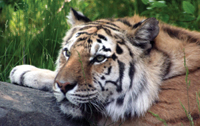
In India, tigers are under threat as are Indian elephants, as their habitats are fast disappearing. The elephants have been reported as going crazy and even attacking human beings, as civilization in the form of roads and houses encroach their territories. Indian safaris could soon lose their allure, if this situation is allowed to continue unchecked.
It is not only wildlife species, which suffer from the activities of mankind, but sometimes also tourism itself. Famous sightseeing destinations like Machu Picchu in Peru are gradually pummelled by tourist’s boots and the resulting wear and tear from consequent camera snapping. In the 1970s, it was quite difficult to reach this magnificent lost city of the ancient Incas and only a few hardy visitors managed to find their way from Lima by train. There were no adjacent hotels in those days. Today it is just a part of packaged tours and the famous ruins are literally becoming real ruins. Again tourism is important for Peru, but it needs to be more strictly regulated.
Whale tourism has brought global attention to these magnificent mammals and reduced the number of tourists visiting Norway and Japan while their citizens are still consuming whale meat. Human concern for whales can often be seen when they unfortunately beach themselves and become stranded in countries like Australia where the locals immediately spring into action to try and save the much-loved mammals and transport them back into the sea.
In Australia, the Koala bears are also finding it difficult to find enough eucalyptus leaves to eat. But to think of Australia without Koalas is like imagining Africa without lions.
I often worry that our descendants will never be able to participate in a vacation to watch wildlife in their natural habitats. Many animals by then will be extinct in the world and there will probably be holiday packages in actual barriers of wildlife reserves like Kolmarden in Stockholm in Sweden or the zoos with aquariums and dolphin parks and just films of these strange creatures of yesteryear called elephants and tigers.
But, who knows - mankind is a very innovative species and recently I read that DNA had been taken from long extinct mammoths found under the Arctic ice and scientists were trying to clone these huge tusked animals by using an elephant as the unwitting mother.
Let’s hope the tourism industry is helping more people to become aware of the fragility of our planet and that the increased awareness will prevent the demise of the wildlife and the irreplaceable ancient monuments.
SPEAKING OUT
by Jonna Simon