
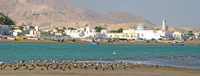
ON OCTOBER 8, Oman handed over the keys to its first foreign resident freehold property owners, a further sign of the sultanate’s commitment to expanding its tourism sector.
The new homeowners were welcomed to The Wave, Muscat - a $2.4 billion integrated tourism complex (ITC) that includes 4,000 villas and low rise condominiums as well as three hotels, a golf course and a marina.
Once criticised for a lackadaisical approach toward tourism, the government of Oman has now made the industry one of its top priorities, embracing foreign residents as central to its vision for the country’s economic development.
Since 2004, an independent ministry had been created at cabinet level to oversee the sector’s development; visa restrictions have been lifted for more than 60 countries; and a promotion board has begun marketing the sultanate’s charms in markets that include Western Europe, Japan and the US.
Significantly, the new arrivals to The Wave are the first to benefit from a 2006 royal decree, which cleared the way for expatriates and foreign nationals to own freehold real estate within specific tourism zones and developments, or ITCs. Under the laws, a non Omani citizen may be granted a residence permit for himself and for his relatives of first degree.
According to Nick Smith, CEO of The Wave, the new regulations have not gone unnoticed.
The freehold property decree is great news for the large number of expatriates who have long enjoyed the lifestyle of the sultanate, he told OBG. It will also pique the interest of those who have never even heard about Oman. With its 1,700km of pristine beaches, developing marinas, golf courses and five star hotels and a famously hospitable local population, many are catching the Oman bug.
Anees Issa Al Zadjali - chairman of Al Sawadi Investment and Tourism, which is overseeing the $20 billion Blue City development that plans to create a new city of 200,000 by 2020 - views Oman as unique in the region.
Oman is different from other Arab countries in that it has a special heritage and culture that is the result of being a seafaring and trading nation, he told OBG. “Omanis have always looked outwards and so are very welcoming by nature. We have all the ingredients here to become a major tourism and foreign property ownership destination.”
Some critics of the ITCs have claimed that while helping to increase tourism and real estate revenues, too many developers - both foreign and local - are overly focused on the ultra luxury market, thus further contributing to a dearth of affordable housing for the average Omani. There is currently an annual shortage of about 2,500 residential units in Muscat.
According to Anwar Ali Sultan, director of WJ Towell Group, an Omani conglomerate with various real estate interests, the change in housing demand is a result of stable economic growth, which has increased job opportunities in the industry and services sectors.
The emerging scenario of an increased affordable housing demand and a limited supply of such units is fuelling prices upwards, he said.
But Smith feels that although real estate prices in the sultanate have surged over the past couple of years, the Oman market is still reasonable. Compared to other markets in the region, Oman certainly still offers great opportunities. “I certainly don’t foresee a real estate bubble developing, especially with regards to ITCs,” he said.
Nevertheless, the high prices are causing some concern about the possibility of a speculative market developing in Oman. The appetite for plots and units within ITCs has been staggering, replicating the frenzy of investment real estate projects already seen in the region. Throughout the Gulf, property purchase options may change hands several times before units are even built.
But Sultan explained that Oman shouldn’t be compared to its neighbours in terms of real estate, as the industry in the sultanate is still in its infancy.
The concept of freehold properties in Oman is so new that it has generated huge interest. The steep demand for various properties has created numerous opportunities, which have attracted brokers and unstructured intermediaries. This has skewed the market to benefit only their businesses. The market in Oman is very immature, where supply and demand is driving the price. In the long run, as the industry matures, a central regulatory authority will be needed to monitor and set guidelines for Oman’s emerging property market, he said.
It’s not clear now whether Oman’s ITCs will develop into successful communities or whether the market will prove to have been an investment driven bubble. But the Van Buitenen family from the Netherlands, who just moved into a villa at The Wave, is hoping it’s the former.
Oliver Cornock is Middle East specialist, Oxford Business Group’s regional editor in the GCC.
by Oliver Cornock