Qatar, which is hosting the FIFA World Cup 2022, plans to substantially expand hotel capacity to meet the expected increase in visitor demand and prepare for major events.
'Room supply is expected to more than double, with 56 hotels and 13 hotel apartments currently under construction and set to open in the next five years,' says Rashed Al Qurese, chief marketing and promotions officer, Qatar Tourism Authority (QTA).Of these, an estimated 20 hotels and hotel apartment properties are due to open in 2016, bringing with them approximately 4,000 rooms. Aside from those currently under construction, there are proposals for many more hotels which are in varying degrees of planning and development, he says.In 2015 20 new hotels opened, bringing almost 5,000 additional rooms to the market. Qatar now has 98 hotels and 21 hotel apartment establishments providing total accommodation of more than 20,000 rooms. On the infrastructure side, the recent opening of the new Doha Exhibition and Convention Centre promises to be a major asset in the further development of Qatar’s business events sector. It has 29,000 sq m of dedicated exhibition space, as well as extensive meetings facilities, right in the heart of Doha’s main West Bay business district.Qatar’s growing reputation as a leading cultural destination is also set for a significant boost with the upcoming opening of the new Qatar National Museum, an iconic architectural masterpiece currently under construction on Doha Corniche, says Al Qurese.Other key developments include the ongoing work on the new Doha Metro system, scheduled to come into operation in 2019, and the further development of Qatar as a major international aviation hub thanks to the continued rapid expansion of Qatar Airways’ worldwide services.
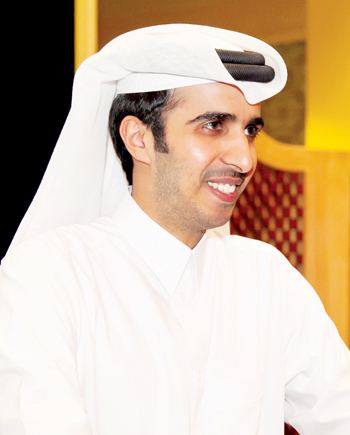 |
Al Qurese ... achieving goals |
Al Qurese says the QTA’s plans are clearly set out in the Qatar National Tourism Sector Strategy 2030. This provides the basic roadmap the country follows in its year-to-year planning.The strategy calls for a major increase in visitor numbers from the present level of just under three million a year to seven to nine million by 2030, together with the expansion of hotel accommodation and other facilities needed to cater to such a large increase. However, it is more than just a matter of numbers. 'We are also focusing on diversifying our geographical source markets and on rebalancing our visitor profile in favour of upmarket leisure tourists and business events delegates,' he says. Qatar is also moving fast in diversifying into new market segments. It is making good progress in developing its cruise business, generating increased interest from operators to include Doha on their regional itineraries and Qatar will be present on the Cruise Arabia stand together with other regional partners at the ATM.'To achieve our expansion goals, we will continue to reinforce our existing two-pronged strategy, working to increase support for the destination from international travel trade, while at the same time promoting greater consumer awareness and consumer drive to Qatar by highlighting the attraction via the media,' he says. 'We attach great importance to regional events such as the ATM (Arabian Travel Market). Tourism from the GCC, as well as the broader Middle East market, is very important to Qatar in terms of both the share of our total visitor numbers and overall tourist spending,' he says. In fact, the GCC is not only Qatar’s leading source of visitors, accounting for some 44 per cent of the worldwide total in 2015, but it is also growing very rapidly. GCC arrivals in Qatar have actually doubled since 2010, rising by 102 per cent in absolute terms over the past five years. The 2016 ATM will be the first major tourism event in the region to showcase Qatar’s recently launched destination brand. This provides a striking and highly distinctive visual identity that ensures Qatar stands prominently amongst other regional and international destinations and the brand will contribute to raising international awareness of Qatar and its tourism product.'We will be focusing primarily on Qatar’s attractions to regional travellers. Our destination offers the ideal mix of attractions to appeal to this market, including top quality luxury accommodation, cultural attractions, family entertainment, festivals and events, as well as great shopping, dining and other leisure activities.'Al Qurese says Qatar’s tourism sector performed strongly in 2015, with visitor numbers increasing by 3.7 per cent over the previous year to reach 2.93 million. This equates to Qatar welcoming 72 per cent more visitors in 2015 than in 2010, which represents an average annual growth rate of 11.5 per cent over the five-year period. As regards the hospitality sector specifically, Qatar’s accommodation providers continued to thrive in 2015, with the overall occupancy rate remaining above 70 per cent, despite a 30 per cent growth in room supply. 'The QTA continued to build on promotional activities worldwide last year and we are confident that the assets of the new Qatar Destination Brand will raise international awareness of our destination and its tourism attractions in future,' he says.Qatar further expanded its overseas network by opening a new representative office in Italy and this reflects significant progress in laying the foundations for future quality tourism development. The QTA introduced new standards of grading and classification to the sector in 2015 and is working on plans to enhance the industry’s infrastructure and services, including the development of a cruise terminal in the heart of Doha. Referring to the current global economic scenario, Al Qurese points out that it is also worth noting that conditions are not the same for every country and region. 'While European travel to the Middle East may have slowed, short-haul intra-regional travel is doing well. We have therefore adapted to prevailing conditions by shifting the focus of our marketing activity accordingly. Last year is a good case in point. We greatly increased our promotions within the region and this no doubt contributed to the sharp growth in Qatar’s arrivals from the GCC, up by 16 per cent at 1.3 million, with the number of visitors from Saudi Arabia alone soaring by 22 per cent to reach 855,555,' he says.
By K S Sreekumar