
CAMBODIA has appeared on a top international destinations’ list indicating the growth in tourism in Southeast Asia.
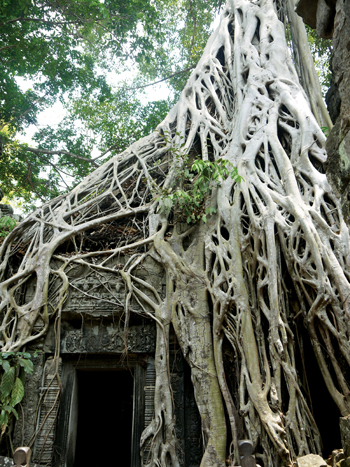
Ninth position was awarded to Siem Reap, in Cambodia, in the sixth annual Travellers’ Choice awards organised by TripAdvisor, the world’s largest travel site. Last year it was awarded the 23rd position. The top spot went to Istanbul in Turkey, followed by Rome and London. Dubai featured at number 17.“If you’re looking for inspiration for trips, look no further than the Travellers’ Choice Destinations,” said Barbara Messing, chief marketing officer for TripAdvisor. “Our global travellers are the tastemakers for uncovering the best places to visit around the world.” Asia Pacific’s tourist market is the fastest growing in the world with gross bookings of $326.2 billion, a figure that is expected to grow by 8 per cent in 2013.The Greater Mekong Subregion (GMS), which is a natural economic area covering 2.6 million square kilometres along the Mekong River, includes Cambodia, the People’s Republic of China (Yunnan Province and Guangxi Zhuang Autonomous Region), Lao People’s Democratic Republic, Myanmar, Thailand, and Vietnam. Despite the global economic downturn in 2009, there has been a revival in the region’s visitor figures more recently, surpassing the historic milestone of 30 million international arrivals in 2010. This growth has been attributed to competitive costs, growing transport links and a relaxation of travel restrictions.According to the World Travel and Tourism Council, tourism-related activities, such as travel services, shopping, entertainment and transportation, generated about $22.1 billion in economic output for the Mekong region in 2010. By 2015, the subregion has set a target of attracting 52 million international visitors and earning $52 billion.Tourists are now clambering to visit less developed destinations, such as Cambodia, after decades of political turbulence from decolonisation, military coups and Khmer Rouge violence have left their scars. In 2011, the country recorded a 13.9 per cent year-on-year increase in international arrivals, from 683,692 to 778,467.Siem Reap is the country’s sixth biggest city in terms of population, although it is the pinnacle destination for tourists visiting the Angkor temples, which are the country’s most popular tourist attraction, with more than 2 million visitors a year.This month, the temples were added to Google Maps’ World Wonders Project. More than 90,000 images have been collected since July to give a Street View perspective and virtual tour of the Angkor World Heritage Site, which includes temples built between 9th and 14th centuries. Google Maps project manager Manik Gupta said: “The sunrise at Angkor Wat in Siem Reap, Cambodia, is one of Southeast Asia’s most iconic and breathtaking vistas.”Case study: sustainable tourism Sustainability starts with profitability. Without profit investment is impossible. With investment anything is possible. This is the approach of Siem Reap’s top hotel on TripAdvisor, the Shinta Mani Resort and Club. Senior sales manager, Sokda Phich, called Steven by his guests, knows a thing or two about sustainability. “Shinta Mani means “open doors, open hearts” in Sanskrit, which reflects our commitment to responsible tourism,” he said. “We are moving Cambodia people away from unemployable to employable.”Cambodia is underdeveloped with 85 per cent of the population living without electricity. Education is not compulsory, and the scars of the Khmer Rouge rule are still healing. The Shinta Mani opened its Club in 2004 with 18 rooms, which expanded to 39 rooms in 2012. The Resort, which opened last year, has a further 63 rooms. The ethos of the hotel is that it’s not a hotel; it’s a foundation. $5 per room per night is donated to the Foundation, which has seven projects aimed at creating a lasting and positive impact for the people of Cambodia. These include a hospitality school; a farming school; a mobile medical clinic; a mobile dental clinic; 1,200 water wells; 97 houses built for the homeless and a “made in Cambodia” market with 50 booths.In addition, all 270 staff receive English lessons from an English teacher from the UK.In Cambodia, a few dollars go a long way in making a difference.Steven added: “We cannot help the whole world, but we are doing what we can to extend our projects bit by bit. We have been able to achieve a lot.”There are plans to open a Shinta Mani hotel in the capital, Phnom Penh, in 2016. By Helen McClure