
Scintillating show on cards
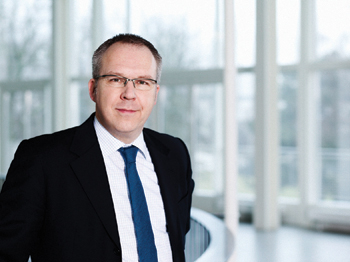
THE outlook is exceptionally good for ITB Berlin as final preparations are under way for an event which will be taking place for the 48th time. Messe Berlin expects around 10,000 exhibiting companies and organisations from more than 180 countries to be present in the 26 halls on the Berlin Exhibition Grounds in Germany. The focus is on Mexico, the partner country of ITB Berlin, which is organising the opening ceremony of the show. David Ruetz, head of ITB Berlin, tells us all we need to know ahead of the event...
What are the key highlights of ITB 2014?
This year, ITB Berlin will kick off with an event on the topical subject of omni-channel marketing featuring high-ranking participants. Digital omni-channel marketing has combined the various methods of addressing the customer to a greater degree than the previous model of multi-channel marketing. For the tourism industry, rapidly developing omni-channel marketing instruments such as real-time advertising and user centric marketing are becoming more and more important. Among those taking part in the new ITB Summit on March 4, from 2 to 6 pm will be Facebook’s head of travel Lee McCabe, who will talk about the prospects for social media securing new customers. Rounding off the programme will be a thought-provoking discussion at which members of various parts of the media will debate the future of marketing communications. The ITB Berlin Convention’s agenda features up-to-the-minute and forward-looking themes and leading experts will be taking part in the debate.
What new attractions will be on offer at ITB Berlin this year?
Once again, travel technology is among the segments that are booming at this year’s ITB. With around 170 exhibitors, the Travel Technology halls (5.1, 6.1, 8.1 and 10.1) are booked up already. 30 new exhibitors will be taking part in the world’s largest travel trade show, including IATI, Nor1 Inc, Accelya, Gate7 Reservation Systems, Abreu Online, Roomize and Vioma. Most of the companies exhibiting “traditional“ travel technology products, who for more than 10 years occupied Hall 6.1, have now moved to Hall 5.1. The eTravel World, which has moved to Hall 6.1, will feature seminars and workshops on big data, social media and mobile communication trends.
This year, for the first time, trade visitors and journalists who want to explore the world of travel technology will receive expert help. Experts will be taking visitors on 60 and 90-minute tours of the Travel Technology halls. They will focus on themes of importance to tour operators, destinations and the hotel trade as well as on mobile communications. The tours will take place on March 5 and 7. Participation is free for trade visitors and journalists, who must register in advance on the ITB Berlin website.
How many new exhibitors have signed on so far? How are bookings looking for 2014? Up or down from last year? What is the expected visitor count this year, as compared to last year?
Compared with last year the number of bookings at ITB Berlin 2014 has remained consistently high. The majority of the halls are already booked up and there are now waiting lists. One noticeable trend is that exhibitors are booking larger stands. This demonstrates that the world’s largest travel trade show is a reliable economic indicator which accurately mirrors the industry’s developments. This year it will once again unite supply and demand from around the world and send out an important message for the future. We expect the visitor numbers to be stable.
What kind of participation can we expect to see from the Middle East and Asia, and what market segments? Is it different from the last year – how?
There has been particularly high demand for places at the world’s leading travel show from countries in Asia and the Arab world. Occupying Hall 22, the Arab countries will be just as strongly represented as last year. Muriya Tourism Development from Oman is a newcomer to the event and the stand of Dubai has increased by 56 sq m. A waiting list exists for Hall 5.2a, where countries from Southeast Asia and the Pacific are represented. Hall 5.2b, occupied by India, is also booked up. For the first time the three Indian states of Andhra Pradesh, Maharashtra and West Bengal will be represented with their own stand. The exhibitors in the Asia Hall will be more diverse than in previous years, as many hotels and holiday resorts are no longer in the sections of their relevant regions and instead will be hosting their own displays. In Hall 26 (Far East and Southeast Asia) 15 exhibitors new to ITB will be presenting their products.
Tell us more about this year’s line-up of conferences and event programs. What are the highlights?
On March 5 at the ITB Future Day, Nils Müller, CEO of TrendONE, will look ahead to the year 2025 and present some innovative travel products. Jean-Claude Biver, the president of the administrative board of Hublot, will talk about the rules of the market for luxury products. An executive who has won many awards, he will explain how globally, customers’ attitudes towards luxury products are changing and will provide an insight into the secrets of successful luxury brand management. There are many more interesting speakers. Just to name three more of them: Christine Duffy, president and CEO, Cruise Lines International Association (CLIA) will examine how destinations can participate in the cruise boom. Bernhard Bohnenberger, president, Six Senses Hotels Resorts & Spas will talk about Luxury & Eco in the hospitality industry, and Doug Lansky, an award-winning travel journalist, will deliver insights on technology innovations for overcrowded destinations.
What are your expectations from this year’s event in terms of business generated?
Each year sales in excess of €6 billion ($8.2 billion) are generated at ITB Berlin. No other place in the world gathers so many leading representatives from the private and public sector. This is where the tone is set for the future of travel for a billion people. The increase in international buyers last year is proof that ITB Berlin continues to be the most important marketplace for the global travel industry.
Over the years, and in your experience, what sort of changing travel trade trends have you observed and what in your opinion is the current spotlight?
We note that a shift has taken place from product innovation towards process innovation. Nowadays the emphasis is less on travel products and instead more on all the areas responsible for creating and marketing this product. That is why the Travel Technology section is becoming more and more important at ITB Berlin and is expanding all the time.
Omni-channel marketing is the focus of this year’s chapter of ITB. Can you share some of the important insights and supporting data from the omni-channel marketing perspective?
Over the years the way people communicate has changed enormously. In addition to the internet, tablets, smartphones and social media have now become daily companions. This trend has also had a serious impact on the tourism industry. Many different channels act as instruments for inspiring, looking for and booking a trip as well as for reflecting on our experiences.
According to a recent Facebook survey, 42 per cent of the website’s posts talk about travel topics. Users are fascinated by photos of destinations and accounts of people’s travels. Customers then either go through online travel platforms, travel agencies, write emails, make phone calls or get in touch in person. In contrast to the once popular method of targeting customers via numerous different channels, nowadays these channels are frequently used simultaneously without separating them individually. It is important to combine the various channels sensibly so that they become indistinguishable to a customer, who can then swap devices and channels at will. Nils Müller, CEO TrendONE, shares this view and will be speaking at ITB Berlin on ‘The world in 2025 – a journey into the future’. For the travel agency it’s also important not just to connect with the customer via point of sale and via print catalogue but to use every channel. That includes Facebook, Foursquare, Twitter, mobile devices, virtual reality like Oculus Rift and tell one story on all touchpoints together.
By Rashi Sen