
THE travel and tourism industry in Asia is on the cusp of unprecedented growth which will have a tremendous impact on the economies of the region, industry leaders predicted.
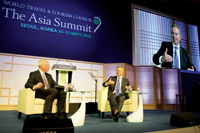
Participating in the first World Travel and Tourism Council (WTTC) Asia Summit which was held on September 10 and 11 in Seoul, the South Korean capital, various speakers highlighted the opportunities and the challenges posed by the expected growth.
Increasing wealth among Asia’s middle classes is driving the region’s travel and tourism, having contributed over $1.7 trillion to the Asian economy in 2012. This is almost nine per cent of total GDP, making it one of the region’s biggest industries.
According to WTTC 2013 forecasts, China will overtake the US as the world’s largest travel and tourism economy by 2023 in terms of total GDP contribution.
“This is a colossal shift for the industry, a huge sea change in consumer demand and one that will transform the way we do business,” said WTTC president and CEO David Scowsill.
“Our forecasts show that over the next 10 years, travel and tourism in Asia will expand by over six per cent year on year, faster than any other region of the world,” he said.
The WTTC, the world’s largest non-profit organisation on travel and tourism, comprises global business leaders in the field. More than 400 top travel executives attended the two-day Seoul summit.
The summit, held under the theme “Staying Ahead of Tomorrow,” touched upon various issues including taxation, government support, removing barriers, connectivity, sustainability, infrastructure and education.
The industry directly and indirectly supported over 144 million jobs in 2012, which is about eight per cent of total employment in Asia. Out of the 70 million new jobs which travel and tourism will create globally by 2023, two-thirds will be in Asia, it said.
While the opportunities are plenty, the speakers warned that serious issues remained to be tackled by governments and the industry and stressed on the need for increased public-private partnerships.
The summit warned governments against imposing unimaginative taxation targeted against the industry, there by impeding its growth. Speakers also urged governments to use technology to ease the visa processes and security procedures at airports.
“Asia’s new middle classes have the right to travel safely, securely and efficiently but still too many people find it too difficult to cross borders as international tourists,” said Scowsill. “Too many governments still view travellers as a soft target for taxation. Taxing the tourist does not lead to positive economic growth. In fact, it leads to the opposite.”
Governments need to have policies in place which support and encourage travel and tourism, and ensure that its benefits filter through the economy, the summit felt. They should prioritise travel and tourism as a key export and service industry, and establish corresponding policies to support the industry, it said.
Former British Prime Minister Tony Blair, who presented the keynote speech at the summit, emphasised the need for all governments to embrace the travel and tourism industry as a force for good – not just economic growth. “It is an industry that can help bring about more peace and understanding,” he said.
South Korea’s Prime Minister Hong-Won Chung said tourism could be the foundation for creating a global community that could live in harmony.
By Sree Bhat