
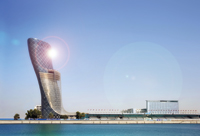
Continuing political uncertainty across the Middle East and concerted marketing efforts by authorities in the various different emirates will see the UAE’s tourism sector post better-than-expected results in 2012.
A recent study by research company Business Monitor International (BMI) forecasts that overseas visitors into the country will climb by nine per cent over the 8.2 million tourists that came to the UAE last year to reach a staggering nine million arrivals this year. The BMI numbers were released by Mark Walsh, portfolio director, Reed Travel Exhibitions, organiser of the Arabian Travel Market. “With the unrest particularly in Egypt and North Africa last year, the UAE experienced an influx of tourism, boosting its status as a regional safe haven,” Walsh said. “With Emirates and Etihad opening-up at least ten more destinations between them this year, not including low cost options flyDubai, and Air Arabia, future tourism growth is assured.”
Resurgent 2011
All the major emirates fared well on the tourism front last year. Guest numbers at Dubai hotels rose 10 per cent to just under 4.6 million in the first half of the year, the increase primarily in Middle Eastern visitors. Passenger traffic through Dubai International Airport, one of the world’s fastest-growing hubs, also increased last year, and was up eight per cent to a record of almost 51 million passengers.
The emirate was also the sole tourist destination in the region to show a rise in both occupancy and revenue per available room (RevPar) in 2011, in spite of a large increase in room inventory, posting increases of four per cent and 4.5 per cent respectively, according to accounting firm Ernst & Young.
Dubai became a market leader with hotels recording the highest occupancy levels of 78 per cent in the period January to December 2011, according to E&Y.
Abu Dhabi also saw a record year, with more than 2.1 million guests checking into hotels and hotel apartments, beating predictions and well above the previous record of 1.8 million in 2010. Hotels occupancies were clocked at 75 per cent, while revenues jumped to Dh4.4bn ($1.19 billion), bolstered by a 30 per cent rise in visitors from India and a 15 per cent surge in tourists from China. Regional tourists accounted for 39 per cent of all arrivals. “This is a highly encouraging result,” Sheikh Sultan bin Tahnoon Al Nahyan, chairman of the Abu Dhabi Tourism Authority told media. “It leaves us well placed to build for 2012 for which we had initially targeted 2.3 million but, in conjunction with stakeholders, will now reassess to see if this too, can be stretched.”
 |
Further afield, Ras Al Khaimah welcomed 835,200 visitors in 2011, primarily from Germany and other European countries, its Tourism Investment and Development Authority (TIDA) said. This exceeded the target of 800,000 and generated revenues of almost Dh400 million ($108.8 million).
Sharjah, meanwhile, also had a successful year. Sheikh Sultan bin Ahmed Al Qassimi, chairman of the Sharjah Commerce and Tourism Development Authority, said last year saw the SCTDA explore new horizons and spread its wings to new markets and regions around the world, further enhancing Sharjah’s distinct profile and attracting tens of thousands of new visitors to the emirate. “Our participation in international events has opened doors to new horizons and new vistas of possibilities,” he said.
Growth continues
Several factors will contribute to an even better performance in 2012, industry insiders say.
Continued instability across the Middle East will see visitors from around the region continue to seek a safe haven in Dubai and visitor numbers are likely to increase. And while traditional source markets in Europe will continue to feel the debilitating effects of a weak euro, visitor inflows from emerging tourist exporting nations such as India and China will continue to rise.
Development will partly be driven by the continued expansion of Emirates airline, which flies to more than half a dozen new destinations this year, including Seattle, Ho Chi Minh City, Lisbon, Barcelona and Harare.
The emirate has also changed the way it markets its tourism product. With tourism and events among the key components of its non-oil economy, Dubai has re-positioned itself as a city of festivals. A series of new government-run events have expanded its appeal beyond the traditional Dubai Shopping Festival and Dubai Summer Surprises, with the new Dubai Events and Promotions Establishment (DEPE) tasked with organising everything from New Year’s Eve celebrations and Ramadan events to National Day festivities. “Our job now is to make sure there are events and retail promotions all through the year, to look at both the micro- and the macroeconomic perspectives and put in place methodologies that will benefit the emirate,” DEPE CEO Laila Suhail was quoted as telling Gulf News.
One initiative is the creation of the Dubai Calendar, which provides information on activities in the emirate for business and leisure visitors and residents.
 |
|
The popular Blue Souq in Sharjah |
Suhail described 2012 as a festive year in Dubai.
Abu Dhabi, meanwhile, has underlined its heritage appeal for tourists by merging its culture and tourism boards. The new body, the Abu Dhabi Authority for Tourism and Culture, will preserve, protect and manage the cultural heritage of the emirate, and promote tourism development to the UAE capital. Besides regulating the tourism sector and attracting tourism investment to Abu Dhabi, the new body has been tasked with developing policies to preserve and explore the emirate’s archaeological and cultural heritage.
The UAE capital has also positioned itself as a major conventions venue in recent times. In February, ahead of the 12,000 delegate-strong World Ophthalmology Congress 2011, the largest meeting ever staged in the capital, the Abu Dhabi National Exhibitions Company launched the International Convention Centre Abu Dhabi to cater for large-scale international conventions and association events.
“ADNEC has an important role to play in achieving the vision for the emirate outlined in Abu Dhabi’s Plan 2030. Building on our success to date, we continue to seek out new opportunities and raise Abu Dhabi’s international profile as a destination for major events; the creation of ICC Abu Dhabi is another step in this direction,” says Ali Saeed Bin Harmal Al Dhaheri, managing director, Abu Dhabi National Exhibitions Company.
The oil-rich emirate has benefitted from tremendous investments into its tourism market, with attractions such as Ferrari World and the Yas Marina Circuit already major draws. Other attractions include the Yas Island Water Park and Adventure World Abu Dhabi. Last month, Abu Dhabi said it would once again push the opening dates of the local Louvre and Guggenheim art museums, originally scheduled to open in 2012 and 2014. The Louvre Abu Dhabi will now open in 2015, the Zayed National Museum will open in 2016 and the Abu Dhabi Guggenheim will open in 2017.
In terms of airline growth, Etihad Airways will begin services on two new routes this year, to Shanghai in March and Nairobi in April. However, by recently taking stakes in Air Berlin and Air Seychelles, the carrier expanded its route network to 269 destinations. Analysts now expect it to seal more stakes in other carriers this year, with Latin America and Asia identified as potential targets.
Northern flights
Elsewhere in the emirates, Ras Al Khaimah in particular looks set to continue. Its low-budget carrier, RAK Airways, begins medium-haul services with a Bangkok route in June, besides launching services to Kathmandu earlier this year. Consequently, tourist numbers are likely to rise considerably, with budget tourists eyeing the northern emirate as an entry point into the UAE.
Air Arabia, meanwhile, expects its 2011 growth story will stretch into 2012, with last year’s six per cent year-on-year increase in traffic likely to rise to increases of between seven/eight per cent, driven by the delivery of six new A320s and extensive network development in the CIS countries, according to media reports quoting CEO Adel Ali.
Sharjah also continues to participate in international events and to develop its own tourism events and festivals such as the Sharjah Water Festival and the Sharjah Light Festival. The SCTDA continues to turn the spotlight on Sharjah’s eminence as the Cultural Capital of the Arab and Islamic world and a favourite family destination, Al Qassimi said. “All this is of course aimed at attracting more visitors and investments to Sharjah and strengthening its economy benefiting all sections of society.”
Further competition for short-haul markets is likely with the launch this year of Eastern Express, the UAE’s first scheduled domestic operator. The carrier, based in Fujairah, has announced a Q1 Abu Dhabi route launch before projected expansion to cities across the GCC (starting with Bahrain), India and Africa.
BY CLARK KELLY