
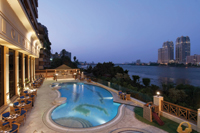
2011 has been a year of openings for Hilton Worldwide as the company opened nine new properties across the region. Rudi Jagersbacher, president, Hilton Worldwide, MEA says: “Three of these were conversions, a clear indicator that owners are recognising the power of the Hilton Worldwide brands. We also took Hilton to three new markets – Jordan, Namibia and Equatorial Guinea. So in spite of some ups and downs, overall our hotels across the MEA region performed well.”
The company also signed for 18 hotels across seven countries, which included six Jabal Omar properties in Saudi Arabia, Waldorf Astoria Ras Al Khaimah and Waldorf Astoria Dubai Palm Jumeirah UAE, as well as the Hilton Beirut Habtoor Grand and the Hilton Beirut Metropolitan Palace in Lebanon.
The recent unrest in the region had its ramification for the company but Jagerbacher adds: “Our strong presence in Egypt with more than 6,700 rooms remained open throughout the revolution. We also continued with our expansion plans – we opened the Hilton Zamalek Residence Cairo and the Hilton Marsa Alam Nubian Resort this year and have Hilton Makadi Resort and Hilton Heliopolis in the pipeline,” says Jagerbacher.
2011 has remained a good year for Hilton in terms of occupancy and RevPar but obviously parts of Middle East fared better than the others.
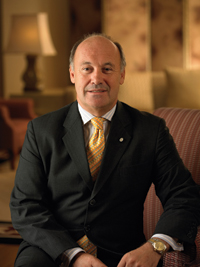 |
Jagerbacher… Hilton expanded in Egypt during the turmoil with two new properties including the Hilton Zamalek (above) |
“The UAE emerged as one of our strongest markets thanks to the opening of two new properties – the DoubleTree by Hilton, RAK and the Hilton Dubai Jumeirah Hotel Apartment. Saudi Arabia is a booming market and we benefited both from the rise in corporate and business tourism (Hilton Garden Inn Riyadh Olaya, Jeddah Hilton, Qasr Al Sharq) and religious tourism (Makkah Hilton & Towers and Madinah Hilton). Our properties in Kuwait and Oman also fared well, thanks to their position as market leaders in their respective markets,” says Jagerbacher.
He continues: “In Egypt, our hotels in resort areas like Sharm El Sheikh and Alexandria operated as usual and guests continued with travel plans. However, as expected, occupancy and rates at the city hotels were impacted by the Tahrir Square uprisings, due to the government advisories placed on travel during the period. For Hilton Worldwide, the impact of the Arab Spring was mainly concentrated in Egypt, and although the region remains a challenge, we have seen a slow and steady return to business and leisure travel.
“A strong segment that we are keen to develop further is the weekender segment within the GCC region. With the number of events scheduled in the various GCC states and the high mobility of this segment, we believe it has huge untapped potential.”
This year, Jagerbacher says, will definitely be a year of expansion and growth for Hilton. “We look forward to growing our brand footprint in this region by 80 per cent over the next three to four years, and with the bullish forecast for the travel industry, we expect a positive outcome.
“In 2012, we expect to launch the Conrad brand in the GCC as well as enter three new markets – Qatar (Hilton Doha), Lebanon (Hilton Beirut Habtoor Grand and Hilton Beirut Metropolitan Palace) and Uganda (Hilton Kampala).”
Currently Hilton has 39 properties in the pipeline amounting to more than 15,000 rooms across 16 countries. In 2012, the opening list spans to 10 properties and these include the Waldorf Astoria Ras Al Khaimah (349 rooms), Conrad Dubai (559 rooms), Hilton Sharjah (259 rooms) and DoubleTree by Hilton Dubai Al Barsha Hotel and Residence (344 rooms) in the UAE; Hilton Doha in Qatar and Hilton Kampala in Uganda.