
Desert rose blossoms
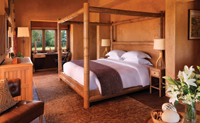
There are exciting times ahead at Abu Dhabi‘s Desert Islands Resort & Spa by Anantara with major new developments due to come online in 2012.
Opened in October 2008 the resort is situated on Sir Bani Yas Island the Royal Nature Reserve established by the late ruler and founder of the UAE, HH Sheikh Zayed Bin Sultan Al Nahyan. The exclusive destination is surrounded by the wild vastness of the island, transformed into an ecologically-viable, wild-life rich natural preserve and scenic retreat.
Currently offering 64 luxuriously-designed rooms, two Royal Villas and four Beach Villas, complete with 24-hour butler service, as well as the intimate Anantara Spa, the resort will soon see its capacity increased with the addition of 60 new luxury villas in two distinct lodges, Al Yamm and Al Sahel.
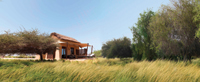
Al Sahel Lodge is comprised of 30 villas, each with private plunge pools, and is designed to be one of the few places in the region where guests can view free-roaming wildlife from their lodge right in the middle of the Arabian Wildlife Park.
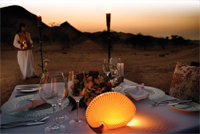 |
The lodge will feature two restaurants, the Savannah Grill offering eastern and southern African specialities and Trackers, the South Asian pool bar and grill, as well as a swimming pool, cigar lounge, retail outlet and prayer room.
Also made up of 30 villas, ranging from one- to three-bedrooms, Al Yamm Lodge has 15 villas on the beach and 15 overlooking a beautiful salt water lagoon rich with mangroves and wild flamingos. Again there are two restaurants, Amwaj, Middle Eastern all-day dining, and La Luce, the Italian pool bar and grill.
Al Yamm guests will have access to a swimming pool, lounge, library, business centre, shop and prayer room and both lodges will offer all the water and nature-based activities the resort is famed for.
And whether down by the mangrove lagoon or up in the Arabian Wildlife Park, the exterior of both lodges fits seamlessly with its environment while the interiors are carefully selected to offer five-star comfort in a natural setting.
The lodges are expected to open in 2012 and other new developments for the coming year include a watersports centre which is currently under development adjoining the existing resort. This centre will offer diving certification and day trips out to the neighbouring islands where shipwrecks and an abundance of sea life can be observed.
A stables, expected to open in early 2012, is also under construction which will house Arabian horses and form part of an equestrian centre, including riding and training rings and grass and sand paddocks, offering lessons and tours for guests through the unique environment of Sir Bani Yas Island.
Further expansion at the Desert Islands Resort & Spa by Anantara is to include a conference centre, scheduled for completion in the second quarter of next year, which will accommodate up to 350 guests (banquet-style) or 560 (auditorium-style), six breakout rooms, a terrace and business centre.
All the new developments, like the existing resort, are being built to strict criteria to preserve the natural habitat. Developer, the Tourism Development and Investment Company (TDIC), has put in place strategies for water and energy conservation, waste management, preservation of local heritage, both archaeological and cultural, environmental education and minimisation of pollution.
Sir Bani Yas Island is 87 sq km, making it one of the largest natural islands in the UAE. It was originally developed as a wildlife reserve by Sheikh Zayed in 1971 to ensure the survival of Arabia’s endangered species.
The island was opened to weekend visitors in the 1990s and tours became so popular that visits had to be booked months in advance leading eventually to the establishment of the Desert Islands Resort & Spa.
 |
Desert Islands comprises eight natural islands that include the nature reserve of Sir Bani Yas Island, the historical Dalma Island and the untouched Discovery Islands.
As part of the late Sheikh Zayed’s ‘Greening of the Desert’ programme, several million plants and trees have been planted on Sir Bani Yas Island.
In the UAE, mangrove shrubs and trees of the species Avicennia Marina (Gray Mangrove) occur naturally along several coastal areas, including Sir Bani Yas Island. Mangroves are extremely beneficial creating protected areas for fish to breed, removing carbon dioxide from the water and preventing erosion. Therefore, on Sir Bani Yas Island one mangrove is planted for every visitor to offset the environmental impact of their trip.
Wildlife comes first on Sir Bani Yas Island and staff follow strict codes of conduct in order to preserve the island which is home to more than 30 species of free-roaming animals.
Key to the environmental and conservation efforts on the island is the creation of the Arabian Wildlife Park. This 4,100 hectare area (almost 50 per cent of the size of the island) is dedicated to breeding and rehabilitation of animals indigenous to the Arabian Peninsula and already houses 10,000-plus animals.
It is being developed in four phases with the aim of relocating animals back to the mainland and reintroducing indigenous species, such as cheetah, which are no longer found on the Arabian peninsula.
The park is being developed to provide an authentic environment for Arabian animals to freely roam while the island remains an exceptional experience for visitors. And one of the most popular residents to see is the critically endangered Arabian Oryx. This unique indigenous animal has been classified as extinct in the wild since the 1960s. Today, Sir Bani Yas Island is home to a herd of more than 500.
Many species of wild birds found on the island are indigenous to the region, such as eagles and falcons, and several non-indigenous species have settled during migration and made the island their permanent home. Birdlife includes flamingos, cormorants, pintails, shovellers, black-winged stilts, teals, crab plovers, avocets and grey herons.
The island is home to many animals that the International Union for Conservation of Nature classifies as critically endangered or vulnerable in the wild, including sea turtles, sand gazelles, blackbuck antelope, urial sheep and Barbary sheep.
A master plan for Sir Bani Yas Island is being developed with a watchful eye to ensure the preservation of ecosystems and marine environments. As such, more than 90 per cent of the island is being dedicated to nature and wildlife. Nowhere is this showcased more than with the development of the Arabian Wildlife Park which is part of what makes this resort such a unique experience in the region.
Defining the resort’s special form of luxury, general manager Christian Zunk said: 'We offer our guests an opportunity to venture further into the destination and its surroundings. The resort offers an indigenous experience at every level bringing the feel of the country to our guests, inspired by the culture or history of the location. This is also translated throughout the property whether in the architecture and design of the rooms, the traditional Emirati cuisine or ingredients used, excursions or the spa experiences.'