
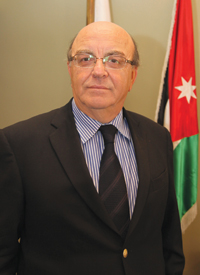
JUST a few weeks into his new role as Jordan’s Minister of Tourism ZAID GOUSSOUS spoke to MAYSA ZUREIKAT about the challenges facing the industry and the future of his country’s tourism offering.
How were things for Jordan’s tourism sector in 2010 and how do things look for the next two years?
In 2010, we saw a remarkable rise in tourism revenues by 17 per cent compared to 2009, with revenues reaching JD2.4 billion ($3.4 billion). For 2011, we expect a slight increase in revenues, but probably not to the same extent and that is because of the political situation in the region. Despite Jordan being a very safe and politically stable country, the events happening outside of Jordan may have an effect on the country.
What are your plans for the future of Jordan’s tourism in light of the global challenges facing potential tourists and destinations alike including fierce competition and the economic crisis?
We are currently finalising our tourism strategy for the years 2011 to 2015. Said strategy is based on four pillars. One of which is product development through which we will focus on developing our existing touristic sites and make sure they have proper management around the sites and improve the service and product experience to be better prepared to receive tourists and stand out in terms of service product.
However, we have many challenges including the number of hotel rooms available and need more qualified staff. For example, we need to fill around 25,000 jobs in the next five years in the tourism sector. This is in addition to the rising prices globally which have affected competitiveness in terms of providing touristic programmes at reduced prices.
Having said that, we are currently building many hotels in order to increase room supply and are revising investment laws in the country to make sure they are more competitive to attract competition.
What are your future plans in terms of promoting Jordan as a tourism destination internationally?
We are promoting long-haul destinations like India, China and Brazil. We are also welcoming the first easyJet flight into Jordan from London next month and soon there will be budget flights from Turkey. We will also be having a number of themed festivals such as the Jordan Festival which takes place every year and hosts a number of international and local artists.
Jordan’s tourism strategy 2004 to 2010 was built on four pillars. How far did the execution process go and how do you evaluate its overall success? How do you plan on building on what has been achieved for future years?
Some pillars moved faster than others such as the marketing pillar which truly paid off as we achieved 30 per cent more than we expected in terms of tourism receipts. This was followed by the product development pillar and the human resources pillar while the tourism enabler pillar is still lagging behind and is an area on which we should work harder.
Sustainability is a major element in the future of Jordan’s tourism and ensuring that its treasures are preserved for generations to come. What are your plans in that realm?
We work very closely with the Jordanian Department of Antiquities (DoA) and Unesco, as well as other stakeholders to ensure proper site management especially in Petra where a plan is currently being devised to manage the flow and the capacity as well as traffic on the site through introducing another exit route for visitors. This would help control both timing and flow of visitors and would be in addition to working on providing proper site facilities for our sites.
The income from inbound tourism from Arab visitors currently stands at 43 per cent. Bearing in mind that the figure in neighbouring destinations is higher, how do you plan to boost visitor numbers and differentiate your products in light of the region’s competition? How do you plan on offering competitive prices, knowing that many of the region’s destinations have fewer taxes on tourism services?
In terms of Arab visitors, we need to work harder and improve on that front. We also need to provide more budget / family packages in our touristic locations especially those forest destinations such as Ajloun and Dibbeen in the north of Jordan where motels and hostels with bed and breakfast and good service is required.
Can you elaborate on the ways Jordan’s tourism projects are benefiting the local community?
Tourism is one sector which affects all sectors of society. Tourism destinations are scattered all around Jordan and therefore the industry has an effect on all of the country. This is also reflected in the number of jobs the industry offers for its local community members. For example, there is zero unemployment in the Dead Sea’s Zara town and in Petra. In other words, tourism helps alleviate poverty.
What should potential tourists look forward to when deciding to visit Jordan?
Apart from the major, well known historical sites, Jordan has many hidden treasures that need to be explored. For example, for adventure seeking tourists there are rock formations and water falls in the Jordanian desert for people to enjoy. There are also a number of desert castles scattered around the country which can be explored.
During the recent meeting between Ministers of Tourism for Syria, Turkey, Lebanon and Jordan, you agreed on a collaboration to boost tourism. Could you tell us more about that?
It is a necessity to cooperate with neighbouring countries to market joint programmes to achieve more tourist development. During the meeting there was an agreement to market these destinations through joint programmes due to the links between these countries, especially in countries like Latin America, Australia and China among others. Co-operation will also focus on facilitating the movement of group tourists to these countries and it will not only be restricted to marketing.