
EARLIER this year I began thinking about that long-awaited summer holiday and, unlike making the decision at home in England where pretty much the only prerequisite is warm weather, I started considering the places I would really like to visit.
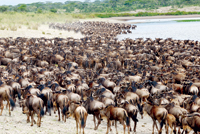
I am a great fan of wild animals, particularly elephants, and have long harboured a desire to see them in their natural habitat. So Tanzania, with its massed herds of wildebeest and zebra migrating across the plains of the Serengeti, and elephants in abundance, seemed a natural choice for a safari break with my sister.
Of course, there are other African nations offering equally breathtaking wildlife experiences but Tanzania is apparently developing its tourism industry and we felt it would be a good place to contribute to the economy.
That was until the meeting of CITES (the United Nations Convention on International Trade in Endangered Species) in Doha, Qatar, earlier this year at which Tanzania and Zambia tried to get the ban on trading in ivory relaxed arguing that they have a stockpile, confiscated from poachers, which they should be allowed to sell.
In 1997 CITES allowed Botswana, Zimbabwe and Namibia to sell ivory stockpiled by their governments’ environmental agencies.
The result was a reported five-fold increase in elephant poaching in Kenya and parts of India with those who slaughter these magnificent beasts for their tusks believing there would be a legal market for the fruits of their murderous labours.
Thankfully other African countries argued forcefully against the relaxation of the ban and, for the moment, it stands. But, bearing the intent in mind, did I really want to go to Tanzania?
At that point the answer was possibly, after all the government claimed cash from the would-be sales would have gone back into wildlife conservation.
However, then the prospect of building a highway through the Serengeti raised its ugly head! The project is another controversial one with big business and mining interests suspected of being the reason behind the Tanzanian government’s approval of the proposal which has provoked outrage among conservationists who say it will devastate the country’s unique wildlife cutting, as it will, through a major migration route.
In 2008, Tanzania raked in $1.3 billion from 642,000 foreign holidaymakers to account for 17.2 per cent of the GDP – and they didn’t come to check-out the agriculture or the mineral mining.
There is a viable alternative route which is argued as being not only kinder to the country’s wildlife but also of more value to the local populations and surely, even if it doesn’t care about the Serengeti animals, the Tanzanian government should be taking the economic implications into account before making decisions of this kind so, as a traveller with cash to spend, I’ve decided to take my custom elsewhere.
But the question is where? There are simply dozens of places that conscience might preclude from the list.
Bangkok, with its kickboxing orang utans, South Korea, with its dog-meat markets, France, with its love of fois gras, Israel, with its subjugation of the Gaza Palestinians, Iran with its stonings and the US’ notorious Guantanamo Bay detention facility – is there anywhere we can truly visit with a clear conscience?
Travel and tourism employs around 235 million people worldwide, a figure that is growing every year, and generates some 9.2 per cent of global GDP.
As travellers we wield huge influence by virtue of our spending power and as part of the travel industry that influence is increased by our ability to actively promote the more responsible destinations.
There are awards for sustainability and various conservation and welfare initiatives but we within the industry can do so much more by also educating travellers, asking them to think about the economies they are contributing to and providing the information to help them make travel decisions that are also ethically responsible.
In short helping them travel with a conscience.
BY Liz O’Reilly