
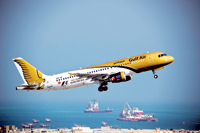
BAHRAIN’S national carrier Gulf Air is heading for new destinations, not currently served by other Gulf carriers, demonstrating its strategy to identify and reach niche and under-served markets and create potentially high-yield city pairs.
The new routes come alongside a reduction in fleet age with the introduction of new aircraft. Increasing technical dispatch reliability and improving on-time punctuality are other highlights of the new business strategy.
New services to Addis Ababa, Ethiopia, Basra in Iraq, Isfahan in Iran, Aden via Sana’a, Yemen, and Colombo, Sri Lanka, are being rolled out from September, coinciding with the airline’s winter schedule.
Gulf Air will launch flights to Isfahan from October 30, with three weekly services, while Aden and Colombo will be served five times weekly from October 31. Three weekly flights to Basra will start from October 31 and there will be five flights to Addis Ababa from December 6.
“While none of the Gulf carriers are serving Aden and Basra at present, cities like Addis Ababa and Isfahan are unexplored markets with Colombo being a popular tourist destination which has not been linked from Bahrain since 2002,” said Gulf Air CEO Samer Majali.
“We believe there is strong commercial potential in all these cities and we hope these routes will be successful like the others we recently launched.”
The new winter schedule, on the other hand, will see Gulf Air serve every regional capital with, at least, a double-daily service including Abu Dhabi, Dammam, Doha, Dubai, Kuwait and Muscat.
The winter schedule will bring the number of flights in the region to 644 per week, up substantially from last year’s 528.
Also part of Gulf Air’s new strategy is to strengthen its international network and offer customers seamless onward connections via Bahrain with the least possible waiting time. As such several improvements have been made in its winter timetable.
Flights to and from Kathmandu have been increased from nine to 11 per week while new split timings have been introduced on the Kuala Lumpur and Bangkok routes to provide better connectivity for European flights.
By the end of the month two additional E190 aircraft will be joining the airline reducing the average fleet age to 6.8 years and in the next three years, 13 more new planes will come into service bringing the fleet age down to 4.1 years making Gulf Air’s fleet one of the youngest in the region.
By optimising its fleet network efficiency, Gulf Air made a saving of 15 per cent on fuel consumption during the first six months of this year and overall costs have been reduced by three per cent.
Majali added that staffing levels have been cut by around 1,000 over the past year while Bahrainisation has reached 52 per cent.