

FROM his first hotel in 1976 WILLIAM HEINECKE, founder, CEO and chairman of the Minor Group, now operates 29 properties under the Anantara brand and is a driving force behind the growth of Thai tourism.
In the aftermath of the recent crisis, he spoke to SHALU CHANDRAN about his passionate mission to promote Thailand as a safe destination for international visitors.
How would you describe the state of the Thai tourism industry currently?
Every time Thailand faces a crisis, it has emerged stronger. I am confident this time will be no different. Despite recent events, Thailand boasts the same fundamental draws — gorgeous scenery, incredible culture, fantastic people and value for money.
People will continue to visit Thailand. Thailand’s tourist industry has proved its resiliency throughout various adverse events that run the gamut from economic crises and political unrest to natural disasters and flu pandemics. With time the memory fades and I know that regional and international guests will return to Thailand, we have already seen an increase in hotel bookings.
In the light of the recent unrest, what do you believe must be done by the government and private organisations to ensure travel safety levels in Thailand?
Quite simply, our destiny lies in our hands and we are ready to mould the future. No-one should underestimate the resourcefulness of the Thai people and their determination to ensure unity, stability and growth for their country.
At this point I feel it is important to remember that while the global media, at times unfairly, portrayed Thailand – the entire country – as being unsafe for tourists, in fact outside of Bangkok, and specifically the Rajprasong area, life remained peaceful and unaffected by the events which took place.
 |
|
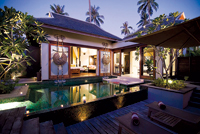
Anantara Phuket villa |
The negative effect on areas of the kingdom untouched by the trouble was not only devastating but unnecessary. The time has come for businesses in Thailand to work together for the greater good of the tourism industry and the nation. Also, one must remember that simply offering cheap deals will not instill confidence in potential guests, so we must look to long-term planning rather than ‘quick fixes’.
We must continue to offer a value proposition and highlight that the nation is at peace. In addition, we must work very closely with the Tourism Authority of Thailand and other government bodies to bring tourism back to Thailand.
What are the lessons learned from past periods of instability?
The Asian crisis of 1997 was definitely one of the most difficult periods that Thailand had seen over the last few decades. It was a case of survival of the fittest and, as with all difficult times, it taught us many lessons and gave us the resources and knowledge to move forward with confidence. Since then, I have told my team to ‘expect the unexpected’, and this attitude has given Minor International the flexibility to respond rapidly to various unforeseen external and internal challenges like the 2004 tsunami, SARS, and the closure of the Bangkok airport, to name a few.
What was the impact of the protests for Minor Group?
Like any other company in Bangkok, we have been affected but we remain very positive about the future. Fortunately for Minor, the impact of the protests and riots on our company has been much less than others, as we have business operations throughout Thailand and overseas.
We have used our time wisely to develop new guest experiences, enhance team training and of course plan for the coming months. Therefore, we are taking additional measures to ensure our future success – seeking out new markets and ensuring that our product offerings remain differentiated.
Who are your biggest source markets now?
It really depends on each market. For Thailand/Bali/Maldives it is geared towards the Asian, Australian, European and Middle East markets. For the Middle East the majority of our markets come from tourists within the region and the European markets.
Are travellers looking for more value/cheaper deals as they return to the country? What kind of feedback have you received from agents?
Thailand hosts many different travellers in many different market segments and yes certainly some of those travellers are looking for cheap deals. However, we like to differentiate ourselves from the ‘normal’ traveller. The Anantara Experience is all about enjoying the culture, heritage and natural beauty of our resort locations. Our brand promise is to bring story-collecting travellers closer to local cultures and experiences with luxury and heartfelt hospitality in exotic destinations. All our resorts offer an indigenous experience from the resort architecture, interior design, food and beverage to guest experiences, excursions and spa treatments, all inspired by the culture or history of their particular location.
Looking ahead, what is in the development pipeline for Anantara? Will we see the company venturing into new markets?
I started the hotel division in 1976 with a small beachfront venture in Pattaya and, since then, the company has expanded to encompass brands such as Four Seasons, Marriott and Anantara (properties owned by Minor). Minor Hotel Group operates in Thailand, the Maldives, Indonesia and the Middle East and we will continue to push forward with more projects both here in Thailand and overseas in the near future. Anantara Kihavah Villas Maldives is poised for its grand opening in December, to be joined by Anantara Al Madina A’Zarqa in Oman, Anantara Sanya in China and Anantara Uluwatu in Bali in 2011.
How successful has the Middle East been for the brand? Will we see more properties here?
The region has been very successful for the brand. Since its opening, Qasr Al Sarab Desert Resort by Anantara has been recognised with top accolades from around the world for its exceptional features and tourism offering including Middle East’s Leading Desert Resort in the World Travel Awards 2010 in May.
And Anantara Al Madina A’Zarqa Resort & Spa is preparing for its opening in 2011. The five-star resort, which pays homage to traditional Arabian architecture, is set on a natural peninsula jutting into the Gulf of Oman.
I think travellers are looking for new experiences and the Middle East is largely an untapped market for the rest of the world.