
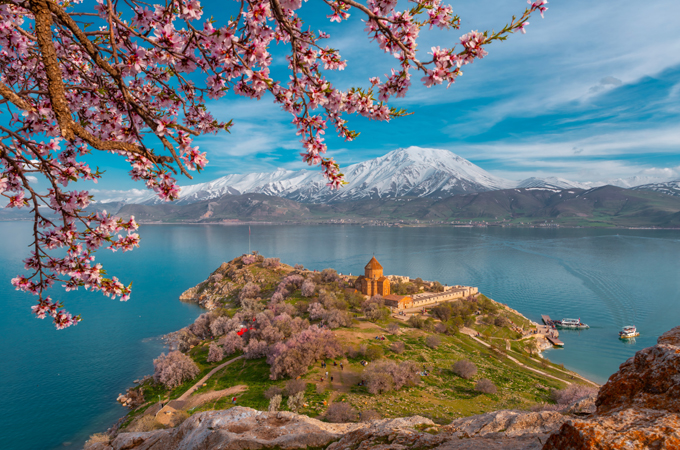
Autumn is emerging as an appealing season for travellers seeking quieter destinations, comfortable weather and immersive experiences, with Türkiye’s lakes offering opportunities to combine nature, outdoor activities and cultural discovery.
The trend coincides with the growing popularity of “lore
chasing”, in which travellers seek meaningful experiences and stories rather
than simply visiting destinations.
More than half of Millennial and Gen Z travellers are
interested in wildlife and nature experiences as part of these journeys.
Türkiye’s diverse geography offers numerous lake
destinations, from areas near Istanbul to the remote landscapes of Eastern
Anatolia.
Lake Sapanca, in Sakarya’s Sapanca district, is a convenient
escape from Istanbul, surrounded by forested hills and turquoise waters.
Visitors can walk or cycle along the shoreline, go kayaking
and birdwatching, or camp and picnic in nearby Arifiye Forest. Nearby
attractions include Mount Kartepe and the nature-rich town of Maşukiye.
In Bolu, Lake Abant provides a year-round nature retreat
around three hours from Istanbul.
Visitors can hike, cycle, fish, camp, picnic, ride horses
and paraglide, with accommodation ranging from hotels and bungalows to
campsites and caravan facilities.
Nearby Yedigöller National Park takes its name from seven
landslide lakes and features waterfalls, forests and diverse wildlife.
Hiking, camping and picnicking are among the main
activities, while bungalows provide options for longer stays.
Travellers can also visit the historic Cittaslow towns of
Mudurnu and Göynük.
Southern Türkiye’s Lakes District spans parts of
Afyonkarahisar, Antalya, Burdur, Isparta and Konya and includes numerous
tectonic lakes.
Among them, Lake Salda is known for its clear waters and
white sands.
Visitors can swim, kayak, hike and photograph the landscape,
while campsites, bungalows, guesthouses and lakeside restaurants provide
facilities for different types of travellers.
Nearby attractions include Burdur’s lavender fields and the
ancient cities of Sagalassos and Kibyra.
Central Anatolia is home to Lake Tuz, Türkiye’s
second-largest lake and a hypersaline environment known for its distinctive
landscapes.
Seasonal evaporation creates a salt layer, while algae can
produce pink hues around sunset.
The lake is also an important habitat for migratory birds
and a major flamingo breeding ground.
Its surrounding protected area has been included on UNESCO’s
World Heritage Tentative List. Cappadocia
is a nearby attraction.
Eastern Anatolia offers several distinctive lake
experiences. Lake Van is Türkiye’s largest lake and the world’s largest soda
lake, while nearby Lake Nemrut, formed within a volcanic caldera, features
multiple lakes, hot springs, fumaroles and ice caves.
In Erzincan, Otlukbeli Lake is a protected natural monument
formed by a travertine barrier and recognised for its striking red appearance.
The region also offers cultural attractions, including Van
Fortress, Bitlis Castle and İhlasiye Madrasa, alongside local experiences such
as Van breakfast.
Girlevik Waterfall near Erzincan provides another nature-focused stop for visitors exploring the area. -TTN