
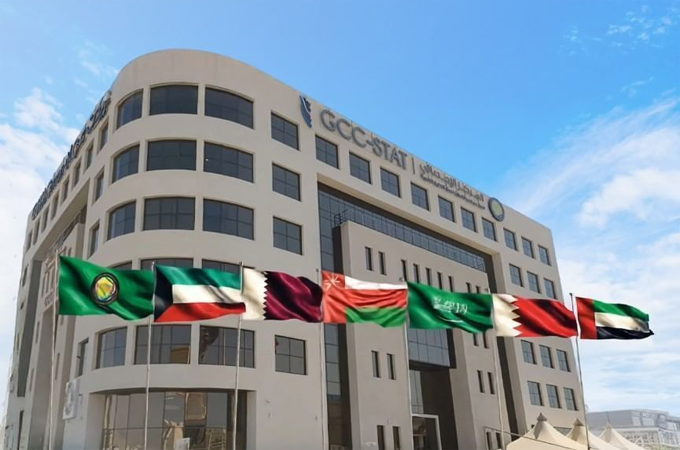
The economic value of tourism in the Gulf Cooperation Council (GCC) countries reached approximately $254.7 billion in 2025, according to a report by the GCC Statistical Centre (GCC-Stat), highlighting the sector’s growing contribution to regional economies and its expanding role in the global tourism market.
The report, titled Strategic Tourism Ambition in the GCC
Countries, said tourism supported around 4.5 million jobs across the GCC in
2025, compared with about 371 million globally.
It examined the sector’s resilience amid geopolitical
tensions, its recovery following the COVID-19 pandemic and its economic outlook
through 2035.
The GCC tourism sector has made substantial progress towards
the objectives of the Gulf Tourism Strategy 2022–2030, with average progress
across six strategic targets reaching 73.8% by 2025.
The gains were driven by increases in international visitor
numbers, tourism spending, the sector’s contribution to gross domestic product
(GDP) and direct employment.
The strategy focuses on six indicators: inbound visitor
numbers, direct travel and tourism GDP, inbound tourist spending, tourism’s
share of GDP, domestic tourist spending and direct employment.
The GCC aims to attract 128.7 million visitors annually by
2030. In 2025, inbound visitors reached 89.9 million, equivalent to 69.9% of
the target.
Visitor numbers increased 3.1% from 2024, while average
annual growth between 2019 and 2025 was approximately 29.4%, despite the
disruption caused by the pandemic.
Inbound tourist spending also continued to rise, reaching $131.9
billion in 2025, or 70.2% of the 2030 target of $188 billion.
Spending increased 9.7% year-on-year and recorded average
annual growth of 17.5% between 2019 and 2025.
Domestic tourism remained another major source of growth.
Domestic tourist spending reached $42.9 billion in 2025,
representing 87.6% of the 2030 target of $49 billion.
It increased 6.2% from the previous year and recorded
average annual growth of approximately 20.3% over the 2019–2025 period.
Direct travel and tourism GDP stood at US$101.7 billion in
2025, reaching 69.8% of the 2030 target of $145.8 billion.
The figure grew 8.8% compared with 2024, while average
annual growth since 2019 was 15.9%.
Tourism’s direct contribution to GCC GDP rose to 4.6% in
2025, compared with the 2030 target of 6.5%.
The contribution increased 7% year-on-year, with average
annual growth of about 7.2% between 2019 and 2025.
Employment also expanded.
Direct jobs in travel and tourism reached approximately 2.2
million in 2025, equivalent to 74.7% of the 2030 target of 2.9 million.
Employment grew 5.6% from 2024, while average annual growth
between 2019 and 2025 stood at 4.9%.
The report said the GCC’s growing tourism performance has
strengthened its position in the international market.
The region accounted for 5% of international tourism in 2025
and 6.9% of global tourism receipts, underlining the sector’s increasing
economic significance.
International mobility has also improved.
According to the Henley Passport Index 2026, the six GCC
countries held the top six positions among Arab countries for passport
strength.
Compared with 2016, GCC passports had improved their
rankings by between six and 36 places as of July 16, 2026.
Overall, the GCC tourism sector is approaching its 2030
strategic targets, with visitor growth, rising spending, stronger economic
contribution and expanding employment underpinning the region’s ambitions to
establish tourism as an increasingly important pillar of economic
diversification. -TradeArabia News Service